
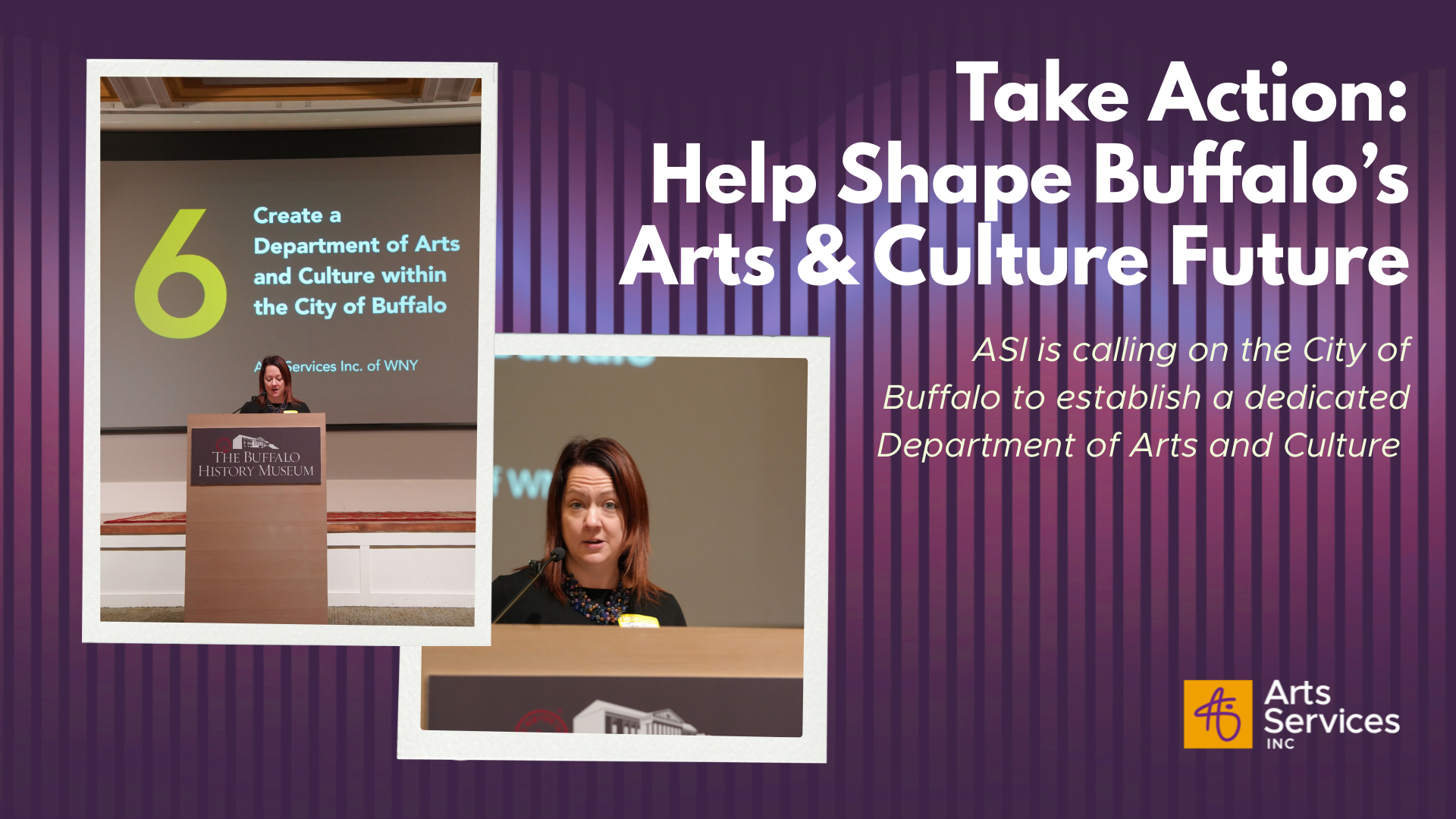
Arts Services Inc. of Western New York (ASI) is calling on the City of Buffalo to establish a dedicated Department of Arts and Culture to centralize, strengthen, and expand city support for arts and cultural activity. This new department would incorporate the existing Buffalo Arts Commission and consolidate current city efforts into a coordinated and transparent structure.
While the City currently maintains a $400,000 budget line item for arts and cultural funding, there has been no formal distribution process in place since 2017, and other forms of support remain fragmented. A Department of Arts and Culture would provide sustained administrative capacity, establish equitable funding processes, and advance long-term arts policy that better serves small- and mid-sized arts organizations, frontline arts groups, and culturally specific institutions.
Why this Matters | Why Now? | Charter Revision: How the Process Works | What This Change Can Achieve: Learning from Other Cities | How to Get Involved
Why This Matters
Arts and culture are essential to Buffalo’s identity, economy, and quality of life. From neighborhood-based organizations to individual artists and cultural workers, the creative sector fuels local jobs, tourism, education, and community connection. Buffalo’s 217 nonprofit arts and culture organizations generate $12.6 million in local tax revenue, support over 1,500 jobs, and with every $1 invested, they return $7 to the community (Americans for the Arts, Arts & Economic Impact Study). Yet without a centralized structure inside city government, arts support remains inconsistent, difficult to navigate, and often inaccessible to the artists and organizations who need it most.
Creating a Department of Arts and Culture would strengthen Buffalo’s arts ecosystem by:
- Supporting arts and culture professionals and practitioners with clearer pathways to resources, visibility, and city support.
- Stabilizing small and mid-sized arts organizations, especially those rooted in marginalized communities, through predictable and equitable funding processes.
- Uplifting culturally specific and frontline institutions by prioritizing inclusive policies that reflect Buffalo’s diverse communities.
- Enhancing public life for residents and visitors by expanding public art, cultural programming, and creative placemaking citywide.
Nearly half of Buffalo’s population identifies as non‑white, yet historic city arts support has often favored larger, predominantly white institutions. A formal department creates an opportunity to redesign how resources are distributed – centering equity, transparency, and representation in decision-making. This isn’t just about funding; it’s about building infrastructure that allows arts and culture to thrive across every neighborhood.
A stronger arts ecosystem also supports a healthier city overall. Investment in arts and culture is tied to economic vitality, workforce development, civic pride, and community wellbeing. By formalizing arts leadership within city government, Buffalo can better leverage creativity as a public good.
Why Now?
The City of Buffalo is currently going through a Charter Revision – a rare opportunity to reshape how city government is structured. This process last happened in 2002 and before that in 1983. Because it occurs so infrequently, it is critical to act while the door is open.
The current city charter already states that an Arts and Cultural Funding Advisory Committee should be created and maintained each year to advise the Mayor and Common Council on city appropriations and manage the annual arts funding process. However, this has not been happening, and there is no consistent structure in place to support this work.
Since the existing process is not functioning as intended, now is the right time to reimagine how Buffalo supports arts and culture. Charter Revision offers the chance to move beyond temporary fixes and establish a sustainable, long‑term solution through a Department of Arts and Culture.
Charter Revision: How the Process Works
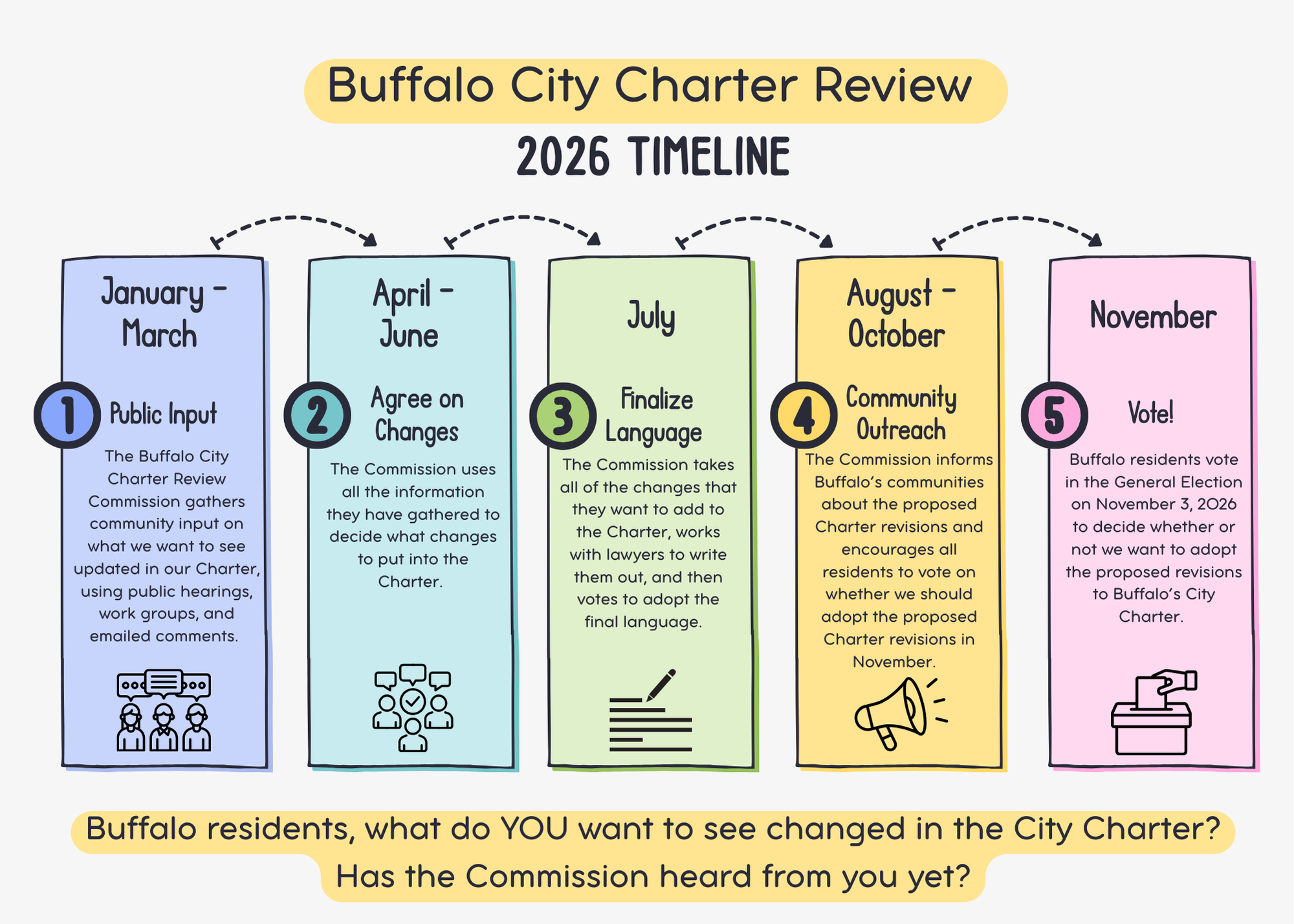
The City of Buffalo has created a Charter Revision Commission to collect feedback from the community on what residents would like to see in the new charter. The Commission has been meeting with the community throughout fall 2025 and winter 2026 and continues to accept written suggestions, comments, and feedback.
In spring 2026, the Commission will compile all public input and decide what changes to propose in the new charter. These recommendations will be submitted to the legislative body of city government and finalized by August 4, 2026.
Late summer and fall of 2026 will focus on educating the public about the proposed revisions. Then, during the general election in November, Buffalo residents will vote on whether to adopt the changes to the City Charter.
What This Change Can Achieve: Learning from Other Cities
Many cities across the country operate successful Departments of Arts and Culture that support creative, thriving communities. While each looks different based on local needs, these departments often include:
- Public art programs
- Cultural funding and grantmaking
- Artist resources and registries
- Management of city‑owned cultural facilities
- Cultural planning and policy development
Cities with this type of infrastructure are often recognized as arts hubs and vibrant creative communities. Each of the cities linked here operates a Department (or Office) of Arts and Culture shaped by local priorities, population size, and government structure. We encourage readers to explore the examples to find comparable communities and see how different cities support the arts.
While Buffalo is already a vibrant arts city, there is no centralized city resource advocating for the sector or highlighting its impact. According to SMU DataArts’ Top 100 Most Arts‑Vibrant Communities, Buffalo currently ranks 69th nationally, in large part due to limited government investment in the arts – one of their key performance indicators.
More important than rankings, increased investment in arts and culture supports a healthier community: stronger local economies, increased tourism, improved education outcomes, workforce development, and social connection. A Department of Arts and Culture helps turn creativity into a coordinated public asset rather than a fragmented system.
How to Get Involved
Your voice matters in the Charter Revision process! Here are a few ways to participate:
- Attend a Charter Revision Commission hearing
- Next meeting: February 12th at 6 pm at the Delevan Grider Community Center
- Check here for more dates to be announced.
- Submit written feedback to the Commission
- Talk with or write to your City representatives about why arts and culture should be prioritized.
- Write a letter to the editor or submit an opinion piece to local media:
Take action now! You can help shape how Buffalo supports artists, organizations, and cultural life for years to come.